
Care Lexicon
Language does more than describe reality. It reflects the social, cultural and institutional contexts in which people live and care.
The Care Lexicon brings together a series of brief video interviews with LeTs-Care researchers, each exploring a word from their own language that is difficult to translate into English without losing part of its meaning.
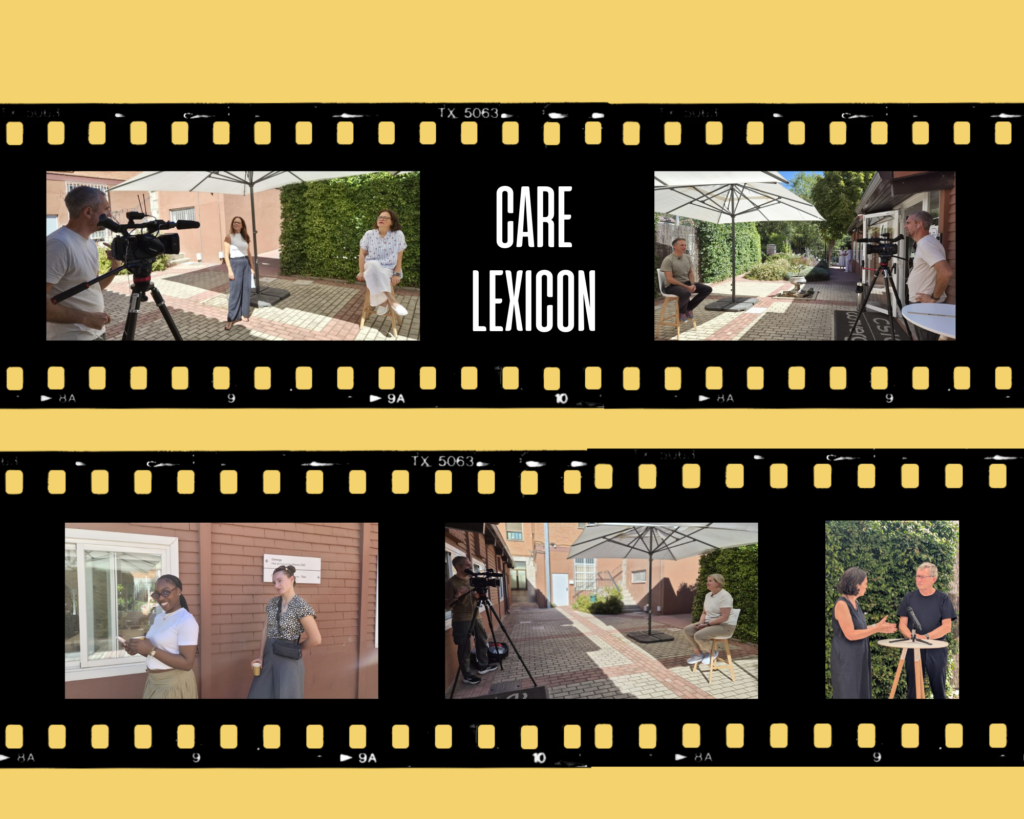
These words may refer to everyday practices, legal concepts, social relationships, or shared experiences. In some cases, they are terms with no direct equivalent in English. In others, they can be translated, but their significance changes when detached from the contexts in which they are used.
By highlighting these linguistic nuances, the Care Lexicon contributes to a deeper understanding of how care is conceived, organised and experienced across different countries.
It reflects the project’s commitment to recognising the importance of context in research and to engaging with the diverse ways care is understood and expressed in different settings.
Ca’ Foscari University of Venice’s Barbara Da Roit on the meaning of “badante” and the role’s relevance in Italy’s care system.
University of Innsbruck’s Bernhard Weicht on the two German words that mean care, “Pflege” and “Betreuung“, and what that means for Austria’s long-term care system.
University of Roskilde’s Bent Greve on how English and Danish convey the meaning of long-term care: “ældreomsorg” and “langtidspleje“.
Vilnius University of Management and Economics’ Virginija Poškutė on the different words Lithianians use for “care”: “priežiūra“, “globa” and “slauga“.
University of Amsterdam’s Jeannette Pols on the nuances of the Dutch word for “care”: “zorg“.
University of Amsterdam’s Kristine Krause on three terms that are very specific: “buurt“, “buurman” and “buurvrouw“, and telling about the Dutch care system.
University of Amsterdam’s Shanniva Mijnals on the role of the “coat carer”, or “mantelzorger“, in the Dutch care system.
University of Porto’s Alexandra Lopes on the expression “respostas sociais” that helps understanding the nature of long-term care in Portugal.
Spanish National Research Council (CSIC)’s Roberta Perna on how unpaid care work within the family and paid work on the fringes of the formal labour market shape Spain’s long-term care: “trabajo de cuidados informal“.