The LeTs-Care Partners

Università Ca’ Foscari Venezia
ITALY

logo

Founded in 1868, Università Ca’ Foscari Venezia (UNIVE) is a leading university in Italy. With more than 22,000 students and nearly 1,400 staff, it is organised into 8 Departments, 3 Schools and one International College, committed to developing the next generation of researchers, scientists and academics through collaboration across disciplines, advanced research projects and innovative study programs.
The University has an outstanding national and international reputation for academic excellence in the fields of teaching and research. It has a long-standing tradition in research and well-established experience in EU funded projects.
Ca’ Foscari University of Venice is part of international research networks and cooperation agreements with some of the most prestigious universities and international bodies in Europe and worldwide and is committed to knowledge exchange, innovation, transfer and social impact.

PROJECT TEAM

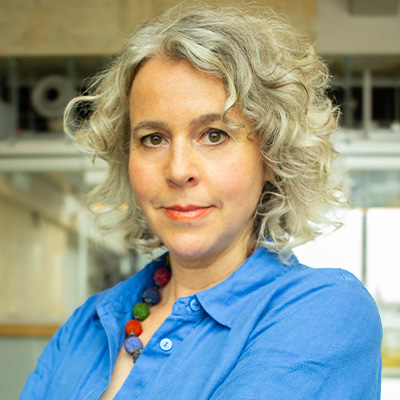
Barbara Da Roit

Barbara Da Roit, Professor of Sociology
Role in the project: LeTs-Care Principal Investigator. UNIVE team leader

Barbara Da Roit, PhD in Sociology (Science-Po Paris) and in Urban European Studies (University of Milano-Bicocca), previously worked at the University of Milano-Bicocca (2004-2007), Utrecht University (2007-2013) and the University of Amsterdam (2013-2016). Her research, embedded in comparative welfare studies, focusses on the relationship between changes in social policies and in social practices with a specific interest in the field of care for elderly people and young children.

Maurizio Busacca, Associate Professor of Economic Sociology and Social Policy
Role in the project: Researcher

Maurizio Busacca research work focusses on social innovation, which he explores from the three intertwined perspectives of labour transformation, non-profit organisations, and local welfare state. He has participated in and coordinated a number of national and regional research projects on, among other topics, universities public engagement, collaborative spaces, the conciliation between care, unpaid and paid work, the nexus between the transformation of welfare state, social work, and the role of third sector organisations.

Pamela Pasian, PhD in Social Sciences
Role in the project: Researcher

Pamela Pasian, PhD in Social Sciences from the University of Padua (2017), is currently a researcher of Sociology at Ca’ Foscari University of Venice. Her work focuses mainly on care, health, welfare and international migration. She took part in several national and international research projects on violence against women, migration and social innovation, reproductive and oncological health.

Elisa Matutini, Researcher
Role in the project: Researcher

Elisa Matutini is a researcher in sociology at Ca’ Foscari University of Venice. Her work focuses on social work theories, poverty, and social exclusion. She holds a PhD in History and Sociology of Modernity, a Bachelor’s Degree in Social Work, and a Master’s Degree in Sociology. Her research interests include eco-social transitions, welfare policies, and the role of social work in reducing inequality.

Francesco Pontarelli, Researcher
Role in the project: Researcher

Francesco Pontarelli is currently a researcher in labour sociology at Ca’ Foscari University of Venice. He holds a Ph.D. in Sociology from the University of Johannesburg (South Africa), a M.Sc. in Labour, Social Movements and Development from SOAS, University of London (UK), and a M.A. in International Relations from the University of Naples “L’Orientale” (Italy). His research interests include labour and social movement studies, platform-mediated work, Antonio Gramsci’s thought, critical pedagogy, and international political economy. He serves as managing editor and book review editor of Notebooks: The Journal for studies on Power (Brill).

Marta Pancheva, Researcher
Role in the project: Researcher

Marta Pancheva, PhD in Civil Economy from LUMSA University (2019), is currently a researcher in Sociology at Ca’ Foscari University of Venice. Her research lies at the intersection of political economy, sociology, and quantitative methods, focusing on social inequalities, ageing, care work, and well-being. She has participated in national and international research projects on social and health inequalities, the social impact of COVID-19, and the governance of local welfare systems.

Eugenia Delaney, Coordinator of the Department’s Research Sector
Role in the project: Administrative and Financial Manager

Eugenia Delaney, PhD in Plant Ecophysiology (Università Mediterranea di Reggio Calabria), has been working as senior Project Manager since 2003. She has extensive experience in national and European project management and implementation, achieved through twenty years of working for private companies and public research institutions in environmental, humanities and social science fields. Since 2017, she is the coordinator of the research sector at the Department of Philosophy and Cultural Heritage – Ca’ Foscari University of Venice. 

Giulia StoratoResearch facilitator/Project manager 
Role in the project: Administrative staff 

Giulia Storato, PhD in Social Sciences at the University of Padova (2016) is currently a research facilitator at Ca’ Foscari University of Venice. Her past research activity focused mainly on Childhood Studies, Migration Studies and Qualitative, Visual and Participatory research. 

Tommaso Musner, Project Manager
Role in the project: Administrative staff

Tommaso Musner, technical and financial project manager of research projects funded by the EU, with more than ten years’ experience. PhD in Environmental engineering. He also provides support in technical writing of project proposals in the field of environmental restoration, marine pollution, waste management and adaptation strategies to climate change.

Roskilde Universitet
DENMARK

Roskilde University was originally established in order to challenge academic traditions and to experiment with new ways to create and acquire knowledge. At RUC we cultivate a project and problem oriented approach to knowledge creation, because we believe that the most relevant results are obtained by solving real problems in collaboration with others. We employ an interdisciplinary approach because no major problems are ever resolved on the basis of any single academic discipline alone. We also cultivate transparency, because we passionately believe that participation and knowledge-sharing are prerequisites for freedom of thought, democracy, tolerance and development.

PROJECT TEAM

Bent Greve, Professor, Department of Social Sciences and Business
Role in the project: RUC’s Coordinator, key researcher and task leader

Bent Greve is Professor in Social Science with an emphasis on welfare state analysis at the University of Roskilde, Denmark. His research interest focuses on the welfare state, and social and labour market policy, often from a comparative perspective. He has published extensively on social and labour market policy, social security, tax expenditures, public sector expenditures and financing of the welfare state. He is editor of Social Policy & Administration. He has published an extensive number of articles in different journals as well as a large number of books.

Sofie Nebel Højberg, Anthropologist and research assistant, Department of Social Sciences and Business.

Role in the project: Researcher

Sofie Nebel Højberg is an anthropologist and research assistant at the University of Roskilde, Denmark. Her current research focuses on the Danish welfare state and different practices within long term care. Earlier research has also focused on the Danish welfare state, namely the school system in Denmark, as well as on health promotion.

University of Amsterdam
THE NETHERLANDS

The University of Amsterdam is one of Europe’s leading broad-based research universities. As a research-intensive institution, the UvA works in close collaboration with other national and international universities by joint research projects or research groups, in the context of which data, knowledge and infrastructure are being shared, thereby creating synergies that improve its quality of research.
The Faculty of Social Sciences at the UvA, and its Amsterdam Institute of Social Science Research is the largest educational and research institution in the social and behavioural sciences in Europe. The research program focuses on the functioning of contemporary societies and their interrelationships from historical, comparative and empirical perspectives. It is organized into thematically focused groups with an anchor in one or more of the represented disciplines: sociology, geography, planning & development studies, political science and anthropology.
PROJECT TEAM

Dr. Jeannette Pols, Professor of Anthropology of Health, Care and the Body
Role in the project: UvA’s Coordinator, key researcher and task leader

Jeannette Pols is Professor of the Anthropology of Everyday Ethics at the department of Anthropology, Faculty of Behavioural & Social Sciences, and the department of Ethics, Law & Humanities of the Amsterdam Medical Center, University of Amsterdam. Her chair is established between the two faculties, bridging research in medical ethics and medical anthropology. Her work develops the ethnographic study of ethical questions, for instance in her 2023 book “Reinventing the Good Life”, UCL Press.

Dr. Kristine Krause, Associate Professor
Role in the project: Researcher

Kristine Krause is Associate Professor at the University of Amsterdam and director of the Research Group Health Care and the Body within the Anthropology Department, dedicated to making academia a friendlier place. Working at the intersection of medical and political anthropology with specific interests in transnational care and history, she leads an ERC funded project on care relocation within Europe and is a member of a VW funded project on the effect of care migration on CEE countries.

Sabya van Elswijk MSc, PhD researcher
Role in the project: Researcher

Sabya van Elswijk works as PhD researcher within the Dutch team. She holds a master in Medical Anthropology and Sociology and works as consultant specialized in building collaborations between long term care organizations. For her master research she wrote an ethnography based on fieldwork in a Dutch care home about social aspects of dementia. She has lived in many different countries around the world, where she studied the local meanings of being old and ways of caring for the elderly whenever possible.

Agencia estatal Consejo Superior
de Investigaciones Científicas – CSIC
SPAIN

The Spanish National Research Council (Consejo Superior de Investigaciones Científicas, CSIC) is the largest public research institution in Spain and one of the most renowned institutions in the European Research Area. It is affiliated to the Ministry of Science and Innovation through the Secretary General for Research. Its mission is to promote, coordinate, develop and disseminate scientific and technological multidisciplinary research. Among its 121 research institutes, the Institute of Public Goods and Policies (IPP) is dedicated to analysing some of the most pressing issues and challenges of the 21st century, such as widening social inequalities and the recalibration of Welfare states, sustainability and climate change, rapid technological change, increasing migration and ethnic diversity, and rising political polarisation and the questioning of core democratic principles.

PROJECT TEAM

Francisco Javier Moreno Fuentes, Senior Researcher

Role in the project: CSIC’s Coordinator, key researcher and task leader

Senior Researcher at IPP-CSIC. Since 2014, he has been a researcher for the European Social Policy Network of the European Commission, and he was Deputy Director of the Spanish High Commissioner against child poverty between 07/2018 and 09/2019. Since July 2022, he is the Vicepresident for International Affairs of CSIC. His work focuses on the comparative analysis of public policies, with a special focus on immigration, welfare, healthcare, long-term care and urban policies. 

Roberta Perna, Permanent Research Fellow
Role in the project: Researcher

Permanent Research Fellow at IPP-CSIC since 2024. Prior to that, she was post-doctoral fellow at the Complutense University of Madrid, Marie Skłodowska-Curie fellow at the University of Liège, and post-doctoral fellow at IPP-CSIC. Her research revolves around the welfare-mobility nexus, with a special focus on welfare and migration policies, politics, implementation practices and reform. Since 2020, she is co-convenor of the ECPR Standing Group Migration and Ethnicity.

Jorge Jose Hernández Moreno, Research Fellow
Role in the project: Researcher

Research Fellow at the IPP-CSIC and Associate Researcher at the Centre for Research on Multilevel Government and Territorial Policies (UNED). He has been a trainee researcher at the Sociological Research Centre (CIS), and currently he is a member of COST Action CA20123 ‘Intergovernmental Coordination from Local to European Governance Action’. His research focuses on the territorial governance of welfare states and social policies, comparative federalism and the reform of the autonomous state.

Eloísa del Pino Matute, Permanent Research Fellow
Role in the project: Researcher

Permanent Research Fellow at IPP-CSIC. She has been the Chief of Staff of the Minister of Healthcare, Consume Affairs and Social Welfare of Spain (2018-2020), and she is the President of CSIC since June 2022. Much of her recent research has dealt with the political conditions for reform of the welfare state and social policies in comparative perspective.

Sebastían Umpierrez de Reguero, Research Fellow
Role in the project: Researcher

Research Fellow at IPP-CSIC and Associate Researcher at Tallinn University. Previously, he held positions at the Autonomous University of Madrid, the Global Citizenship Observatory (GLOBALCIT) at the European University Institute, at Leiden University, as well as at Diego Portales University and Universidad Casa Grande in Latin America. His work focuses on comparative politics and public policy, with particular emphasis on migration, political and welfare attitudes, as well as electoral studies. Since 2023, he has served as co-convenor of the ECPR Standing Group ‘Migration and Ethnicity’ and the IMISCOE Standing Group ‘Migration, Citizenship and Political Participation’.

University of Management and Economics – ISM
LITHUANIA

ISM is an international university that ensures students’ future career with modern learning methods and close connections with the business world.

PROJECT TEAM

ISM Team

Virginija Poškutė, PhD. Professor, Director of Business Sustainability Management Master Programme
Role in the project: ISM’s Coordinator, key researcher and task leader

Economist and social policy analyst, PhD in Economics (Vilnius university), master’s degree in social policy analysis (Roskilde University, Denmark and University of Bath, UK). Virginija was visiting scholar at the University of California, Berkeley and Fulbright researcher at Darden Graduate School, University of Virginia (USA). Virginija has extensive international job experience, has participated in many international consultancy projects for the WB, UN, UNDP, UNICEF, EIGE, European Commission, OECD.

Rūta Kazlauskaitė, PhD. Professor in Human Resource Management. Editor, Baltic Journal of Management
Role in the project: Researcher

Rūta Kazlauskaitė is a Professor at ISM University of Management and Economics, Lithuania. Her research interests focus on socially responsible and sustainable human resource management, corporate social responsibility, diversity and social inclusion, societal and individual wellbeing, AI at work. She has published extensively on the above topics and participated in and lead multiple national and international research projects.

University of Porto
PORTUGAL

With over 100 years of history, UPORTO stands out as a distinguished institution of higher education and scientific research in Portugal and worldwide. It is known for delivering high-quality education and excellence in research, playing a crucial role in the country’s economic, social, cultural, and scientific development. UPORTO includes 14 faculties, a business school, 48 research units (R&D), 17 Associated Laboratories (LA), 22 Collaborative Laboratories (CoLAB), and 11 Associated Research Institutes.
UPORTO is a founding member of the EUGLOH Alliance and collaborates with world-renowned institutions through programs like UT Austin Portugal and MIT Portugal. Additionally, UPorto is a member of the Coalition for Advanced Research Assessment (COaRA). The excellence of UPorto’s ecosystem is reflected in the increasing acquisition of prestigious grants, including 19 ERC grants in various categories.
For more, visit: https://www.up.pt/portal/en/research/what-we-research/r-d-projects/

PROJECT TEAM

Alexandra Lopes, Professor of Sociology.
Role in the project: UPorto’s Coordinator, key researcher and task leader

Alexandra Lopes, PhD in Social Policy (LSE) and Habilitation in Sociology (UPORTO), works at the Department of Sociology of the University of Porto. Her research portfolio, very much framed by policy analysis, focuses on stakeholders’ roles and interests, on inequalities and on quality-of-service provision in the specific field of LTC.

Rute Lemos, Researcher

Role in the project: Researcher

Rute Lemos, PhD in Sociology (UPORTO), works as a full-time researcher at the University of Porto. Her research, framed by qualitative and discourse analysis, focuses on experiences and meanings of old age life circumstances, with a focus on vulnerabilities and inequalities.

Sandra Amaro, PhD student

Role in the project: Researcher

Sandra Amaro is a PhD student at the University of Porto in the PhD in Social Sciences and Ageing. She works as a sociologist in the municipality of Vila Nova de Gaia with responsibilities in implementation of social policies. Her thesis addresses public policy responses to the challenges of ageing at the local level. Sandra Amaro is a PhD student at the University of Porto in the PhD in Social Sciences and Ageing. She works as a sociologist in the municipality of Vila Nova de Gaia with responsibilities in implementation of social policies. Her thesis addresses public policy responses to the challenges of ageing at the local level. 

Hélder Monteiro, PhD student

Role in the project: Researcher

Hélder Monteiro is a PhD student at the University of Porto in the PhD in Social Sciences and Ageing. He is a trained social worker and works at Santa Casa da Misericórdia do Porto where he coordinates a teleassistance program. He is doing a PhD thesis about teleassistance. 

University of Innsbruck
AUSTRIA

logo

The University of Innsbruck is the largest research and education institution in western Austria, with 28,000 students and 5,500 staff and faculty members. Founded in 1669, the University looks back to a long history and comprises today 16 faculties and 83 departments. Located in the heart of the Alps, UIBK offers excellent facilities for research and teaching in a spectacular environment. The University of Innsbruck has always been a supporting pillar of the Tyrolean society and has influenced the region tremendously. International rankings confirm the university’s important role in scientific research, in 2023 its scientists produced over 4,500 publications.
For more information: https://www.uibk.ac.at/en/research/

PROJECT TEAM

Bernhard Weicht, Associate Professor
Role in the project: UIBK’s Coordinator, key researcher and task leader

Bernhard Weicht is Associate Professor in the Department of Sociology at the UIBK. He has studied (Social) Economics in Vienna and Social Policy in Nottingham/UK. He holds a PhD from the University of Nottingham where he researched the social and moral construction of care for elderly people. He received his Habilitation at UIBK in 2018 with work entitled “A Caring Sociology for Ageing Societies“. He was chair of the ESA RN “Ageing in Europe” and is currently co-speaker of ESPANet Austria.

Waldenburger Lisa, Researcher
Role in the project: Researcher

Lisa Waldenburger has a background in sociology and human geography, and has conducted research on topics such as the ‘Intimisation of the Public’ and ‘Digital Stress in Everyday Media Life’. She completed her doctorate on ‘Resonance and Alienation on Facebook’ under the supervision of Prof Dr Hartmut Rosa. Her areas of expertise include digital culture/media sociology, social theory/critical realism, current social theories, and qualitative methods.

Réseau Européen des Villes et Régions de l’Economie Sociale AISBL – REVES
BELGIUM

REVES, as a non-academic participant contribute competences and skills and network. As the only European Network of Cities and Regions that cooperate strictly with social economy enterprises, REVES finds itself in the best post possible position to ensure comprehensive, far-reaching and effective policy communication, dissemination and exploitation measures to the project, ensuring a direct link with local and regional authorities throughout Europe, as well as with EU Institutions and bodies and other International Organisations.

PROJECT TEAM

Luigi Martignetti

Luigi Martignetti, Secretary General of REVES
Role in the project: REVES’s Coordinator, Policy advisor and Network manager

Since 1999 Secretary General of REVES, Luigi Martignetti has developed specific competences in the field of civic participation, democracy and local governance patterns, with particular reference to public social private partnerships. In this context, he participated in the elaboration and implementation of several participatory policy development experiences, at local, national and European level.
He was among the designers and developers of the REVES-generated “TSR approach” for local participatory context-analysis and policy making. Also, since 1997, he has been either managing or supervising European projects financed by the EC under different programmes. Luigi Martignetti also contributed as an expert to studies, publications and seminars of organisations and platforms such as the OECD and the European Commission.

Elisa Mancinelli, Policy advisor
Role in the project: Policy and Communication advisor

Researcher in social sciences and evaluation studies withs 20+ years experience working as evaluator, researcher, project manager in projects/outreach campaigns with universities, independent research centres and NGOs. With her research she has been dealing with urgent societal matters such as social communication campaigns and community-based initiatives aimed at preventing hate speech and radicalisation phenomena; innovative measures and pedagogical approaches in education and vocational training programmes for disadvantaged target groups.
Since 2012, she has been working as a free-lance researcher and project manager, also collaborating in the preparation of project proposals in the framework of national and international calls. She has also been carrying out monitoring and evaluation assignments at project level.
She has a university background in political sciences from the University of Florence (I) and an MA in Advanced European Studies from the College of Europe in Bruges (BE).